
- Financial freedom starts with small, consistent habits rather than huge lump sums.
- Focus on controlling what you can: your monthly cash flow, saving targets, and debt priority.
- Always keep an emergency buffer to avoid relying on high-interest credit cards when unexpected bills arise.
Risk vs Return Explained If there is one concept every investor needs to understand, it is the relationship between risk and return. This fundamental trade-off shapes every investment decision you will ever make. Let us break it down so you can make smarter choices with your money.
What Is Risk?
In investing, risk refers to the possibility that your investment will lose value or not perform as expected. Every investment carries some degree of risk. The most common type of risk is market risk. This is the risk that the overall stock market declines, taking your investments down with it. Even great companies can see their stock prices fall during a market downturn. Other types of risk include inflation risk (your returns do not keep up with inflation), interest rate risk (rising rates reduce bond values), and company-specific risk (a particular company fails or underperforms).
What Is Return?
Return is the money you make from an investment. It can come in two forms: capital gains (your investment increases in value) and income (dividends, interest, or rent). Return is usually expressed as a percentage. If you invest one thousand dollars and it grows to one thousand one hundred dollars, your return is ten percent.
The Fundamental Trade-Off
Here is the key concept. Higher potential returns come with higher risk. Lower risk investments tend to offer lower returns. This makes intuitive sense. If an investment is very safe and guaranteed, everyone would want it, and the returns would be driven down. Riskier investments need to offer higher potential returns to attract investors willing to take on that extra risk. Think of it like a spectrum. On the low-risk, low-return end, you have savings accounts and government bonds. Your money is very safe, but it does not grow much. In the middle, you have corporate bonds and balanced funds. Moderate risk with moderate potential returns. On the high-risk, high-return end, you have individual stocks, small-cap stocks, and emerging market investments. Your money could grow significantly, but it could also lose significant value.
Risk and Return in Practice
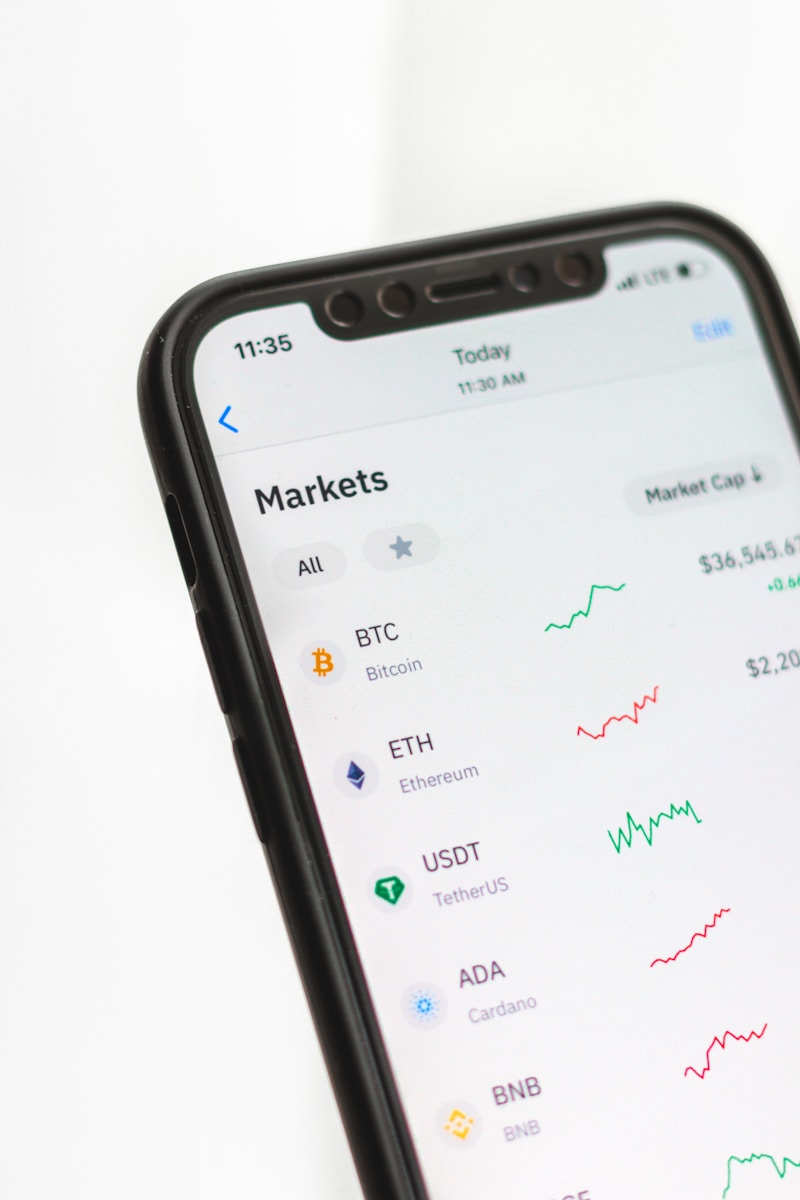
Let us look at some real numbers. A savings account might earn one percent per year. Very safe, very low return. Government bonds might earn two to four percent per year. Very safe, slightly better returns. A diversified stock portfolio (like an S&P 500 index fund) has historically returned about seven to ten percent per year after inflation. Higher returns, but with short-term volatility. Individual growth stocks can return twenty, fifty, or even one hundred percent in a single year. But they can also drop by the same amounts. Speculative investments like cryptocurrencies or penny stocks can potentially multiply your money many times over. But they can also go to zero.
How to Think About Risk
Not all risk is bad. In fact, some risk is necessary if you want your money to grow. The key is to take the right amount of risk for your situation. Your risk tolerance depends on several factors. Your time horizon is the most important. If you have decades before you need the money, you can afford to take more risk because you have time to recover from downturns. If you need the money in two years, you should take very little risk. Your financial situation matters too. If you have a stable income, a fully funded emergency fund, and no debt, you can afford to take more risk than someone living paycheck to paycheck. Your emotional tolerance counts as well. Some people can watch their portfolio drop thirty percent and not lose sleep. Others panic and sell at the worst possible time. Be honest with yourself about how much volatility you can handle.
Managing Risk
You cannot eliminate risk entirely, but you can manage it. Diversification is the most effective risk management tool. By spreading your money across different types of investments, sectors, and geographies, you reduce the impact of any single investment performing poorly. Asset allocation is related to diversification. It means deciding what percentage of your portfolio goes into stocks, bonds, and other asset classes. A younger investor might have ninety percent stocks and ten percent bonds. An investor near retirement might have fifty percent stocks and fifty percent bonds. Dollar-cost averaging reduces risk by investing a fixed amount regularly regardless of market conditions. This prevents you from investing all your money at a market peak. Rebalancing means periodically adjusting your portfolio back to your target allocation. If stocks have done well and now make up a larger portion of your portfolio than intended, you sell some stocks and buy bonds to get back to your target.
The Risk of Not Investing
Here is something many people overlook. There is also risk in not investing. If you keep all your money in a savings account, you face inflation risk. Over time, your purchasing power erodes. In twenty years, the money in your savings account will buy significantly less than it does today. By not investing, you also face the risk of not reaching your financial goals. Retirement, your children's education, financial independence. These goals may be unachievable without the growth that investing provides.
Common Mistakes
Many investors misunderstand risk and make mistakes as a result. Some take too little risk. They keep everything in savings accounts or bonds and wonder why their money barely grows. Others take too much risk. They put everything in a single stock or speculative investment, hoping for a big payoff. When it does not work out, they suffer devastating losses. Some confuse volatility with risk. Just because a stock's price bounces around a lot does not mean it is a bad investment. Volatility is normal. True risk is the permanent loss of capital.
Frequently Asked Questions
Is there any investment with no risk?
No investment is truly risk-free. Even a savings account carries inflation risk. However, investments like government bonds and insured savings accounts have very low risk of losing your principal.
How do I know my risk tolerance?
Ask yourself how you would react if your portfolio dropped by thirty percent. If you would panic and sell, you need less risk. If you would see it as a buying opportunity, you can handle more risk. Many online tools offer risk tolerance questionnaires.
Can I change my risk level over time?
Absolutely. In fact, you should. As you get older and closer to needing your money, you should generally reduce risk by shifting from stocks to bonds. This is exactly what target-date funds do automatically.
Final Thoughts
Risk and return are inseparable. You cannot have high returns without accepting higher risk. The key is not to avoid risk entirely but to understand it, manage it, and take the right amount for your personal situation. By diversifying your investments, matching your risk level to your time horizon, and staying disciplined, you can navigate the risk-return trade-off successfully and build lasting wealth.
Practical Action Steps for You Today
- Review Last Month’s Expenses: Audit your bank statement for recurring subscriptions you no longer use.
- Automate Your Savings: Set up a small automatic transfer of $5 to $20 into savings on payday.
- Track Debt Payoff: Use either the Debt Snowball or Avalanche method to stay motivated.
Frequently Asked Questions
How can I start saving if I live paycheck to paycheck?
Start small. Even saving $5 or $10 a week builds the psychological habit of saving. Automate the transfer immediately after getting paid so you never miss it.
What is the safest place to keep my emergency fund?
A High-Yield Savings Account (HYSA) is ideal because your money remains FDIC-insured, completely liquid, and earns significantly higher interest than traditional checking accounts.